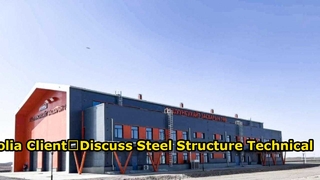
Prefab Steel Warehouse

Other Videos
December 09, 2024
Category Connection: Prefab Steel Warehouse
Brief: Discover how this 1000 square meter prefabricated food factory steel structure warehouse building works in this detailed walkthrough. You'll see how its hygienic design, structural integrity, and rapid construction process meet the highest international food industry standards. Learn about the key features that ensure compliance, safety, and scalability for your food processing operations.
Related Product Features:
  • Hygienic design with smooth, non-porous steel surfaces to minimize bacterial harborage points.
  • Seamless walls, ceilings, and coving facilitate easy and thorough cleaning, compatible with CIP/SIP environments.
  • High-strength steel framing provides exceptional load-bearing capacity for heavy machinery and multi-level processing lines.
  • Pre-engineered steel components enable rapid assembly, significantly reducing project timelines.
  • Clear-span interiors offer unobstructed, flexible floor plans for optimal production line layout.
  • Engineered to comply with stringent international food safety regulations and enhance fire safety.
  • Highly recyclable steel construction reduces environmental footprint and minimizes on-site waste.
  • Excellent thermal performance options with advanced insulation systems lower energy consumption.
Faqs:
  • Do you provide on-site installation service?
    We can provide installation guide service based on customers' request.
  • What is the typical delivery time for this prefabricated food factory?
    Normally, delivery time is 30 days after receiving deposit. For large orders, delivery time should be arranged separately with our order management department.
  • How do you ensure the quality of your prefabricated steel structure buildings?
    We ensure quality through high-quality design solutions, qualified raw materials, precise manufacturing techniques, experienced workers, and strict quality inspections. We also support testing and certification by SGS, TUV, and BV.
  • How can the building design adapt to different climatic conditions?
    For strong wind regions, we improve the wind-resisting ability. For cold regions, we increase wall thickness and use better insulation. For high corrosion regions, we use corrosion-resistant materials or anticorrosive coatings.